



BioJalisco — Cinematic Scrollytelling Pitch Site
Cinematic scrollytelling pitch site with AI-powered species identification for western Mexico's biodiversity platform
Demo Video
The Problem
Conservation researchers in western Mexico face an asymmetry: deep scientific expertise but limited reach. Their work covers a fraction of Jalisco's 80,000+ km² territory. BioJalisco proposes closing that gap through citizen science and technology, but the vision needed a compelling presentation to win stakeholders and partners.
The Solution
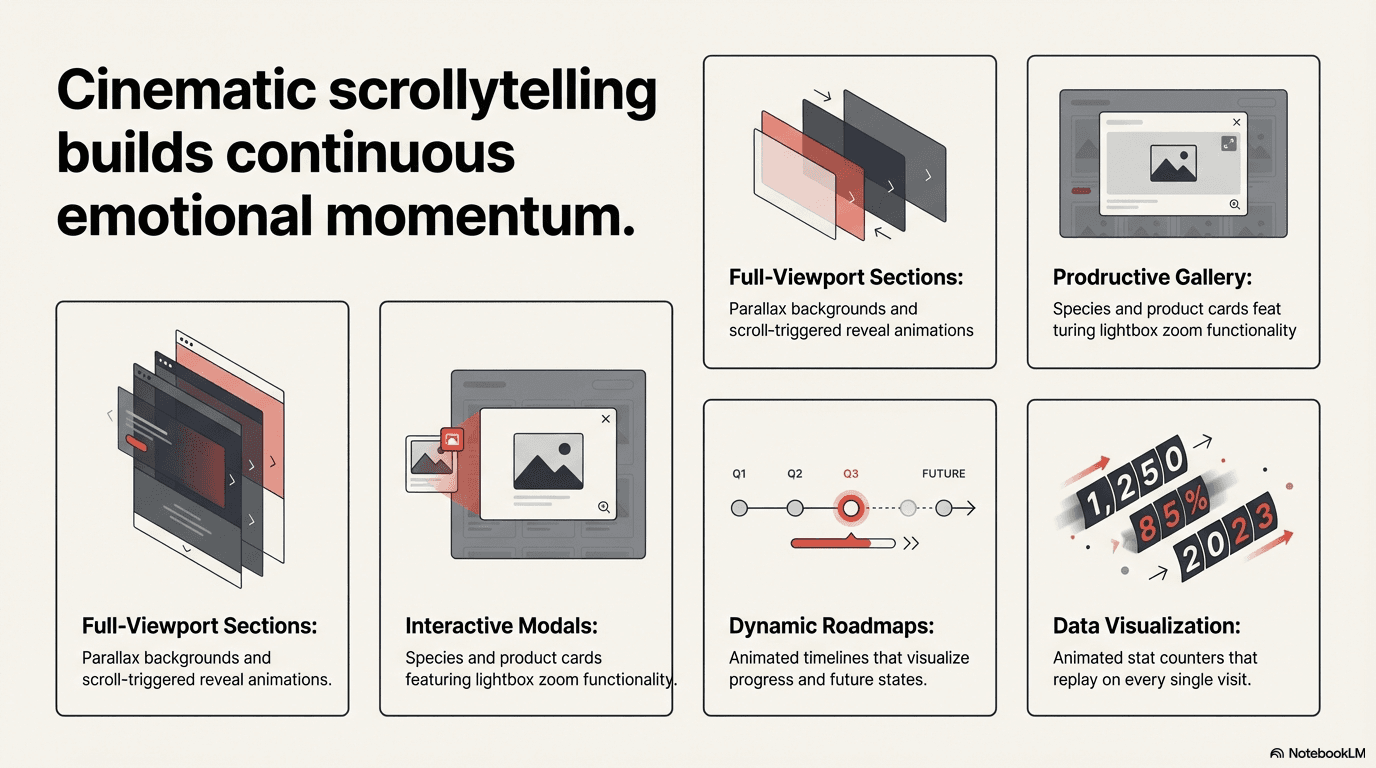
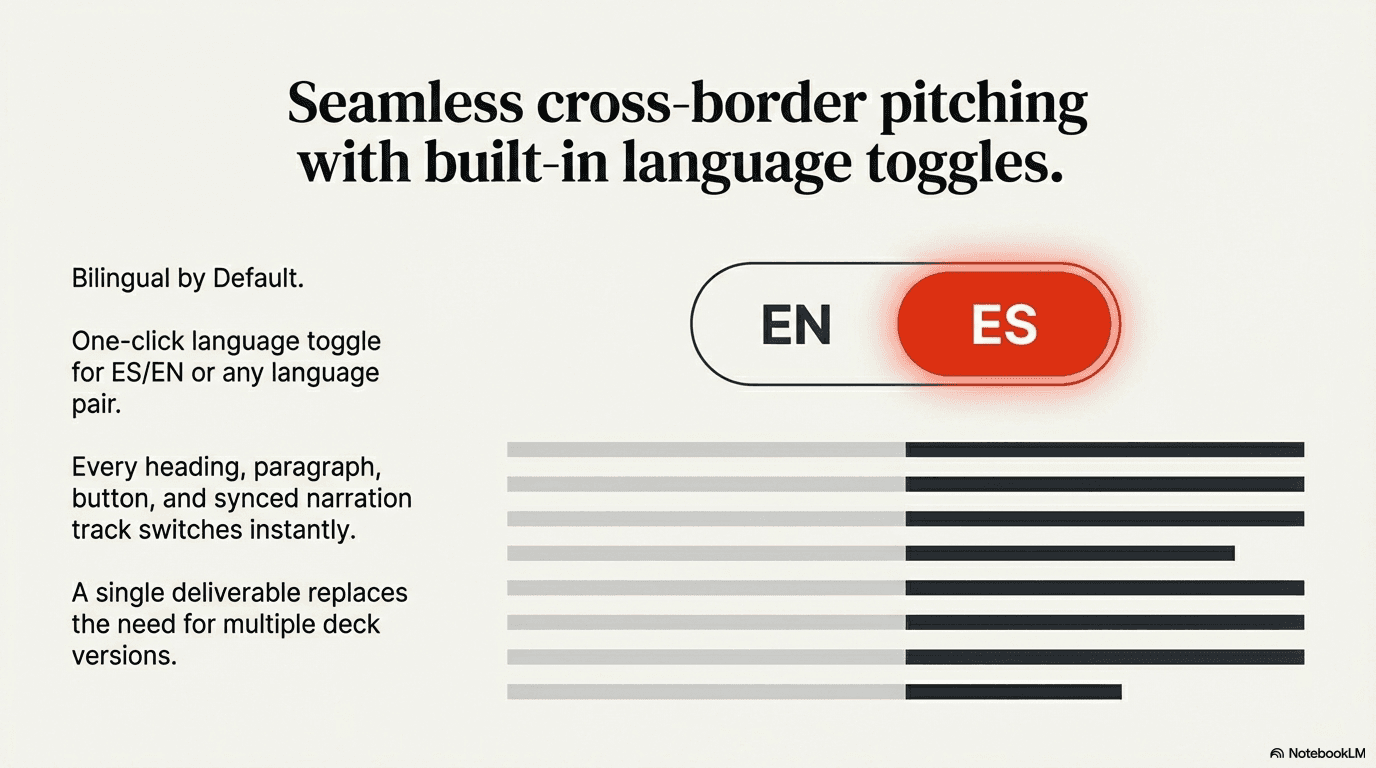
A single self-contained HTML file delivers a cinematic 5-act narrative arc (Hook, Problem, Vision, Evidence, Ask) with scroll-triggered animations, animated counters, and a procedural forest soundscape generated in real time via the Web Audio API. A data-lang attribute toggles ES/EN content instantly with no page reload, so Mexican academics and international partners share one seamless bilingual experience. All nine images are converted to WebP and embedded as base64 data URIs, making the 1.8MB site fully portable with no build step and no external dependencies beyond Google Fonts. A GPT-4o vision-powered species identifier lets stakeholders try the platform's core AI capability immediately.
Key Features
- Self-contained single-file HTML site with 9 embedded images (~1.8MB total)
- Bilingual ES/EN with instant language switching
- Cinematic 5-act narrative arc designed for stakeholder persuasion
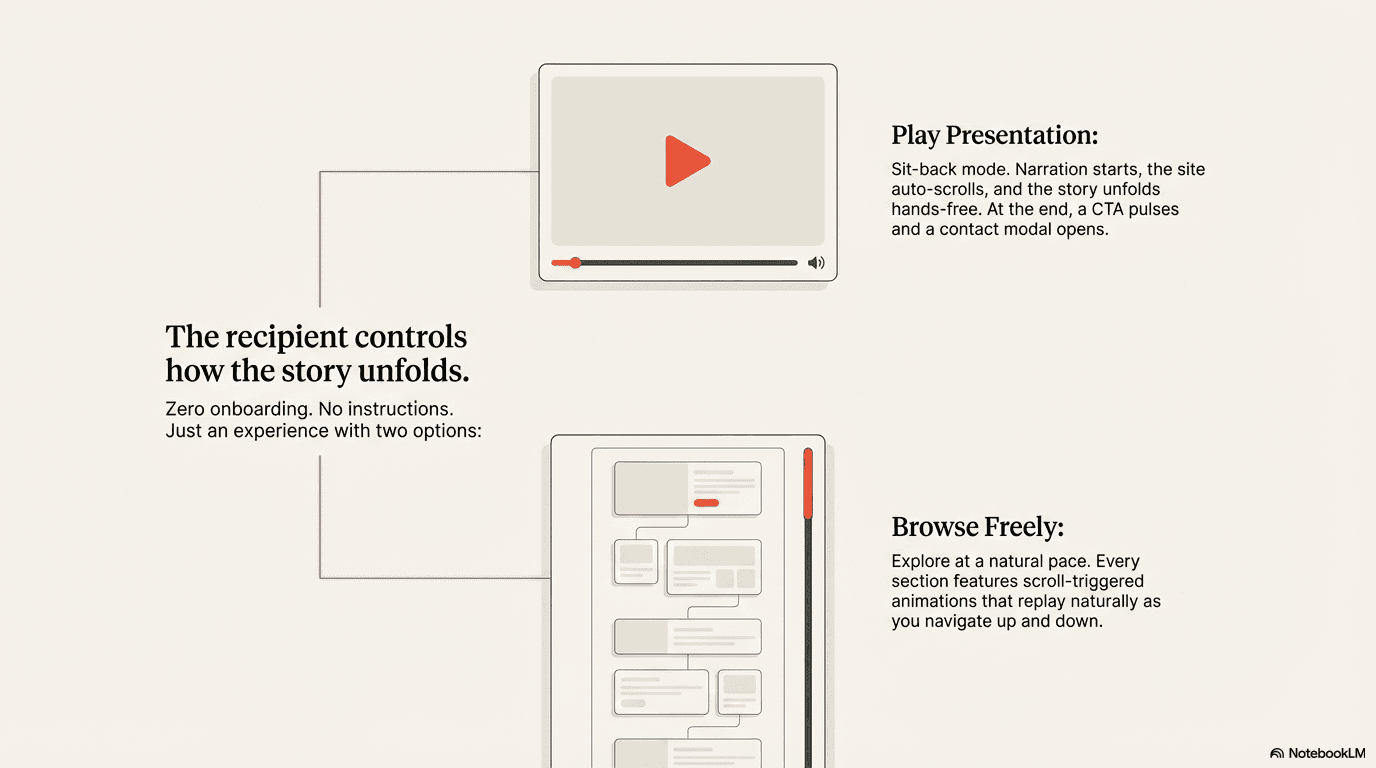
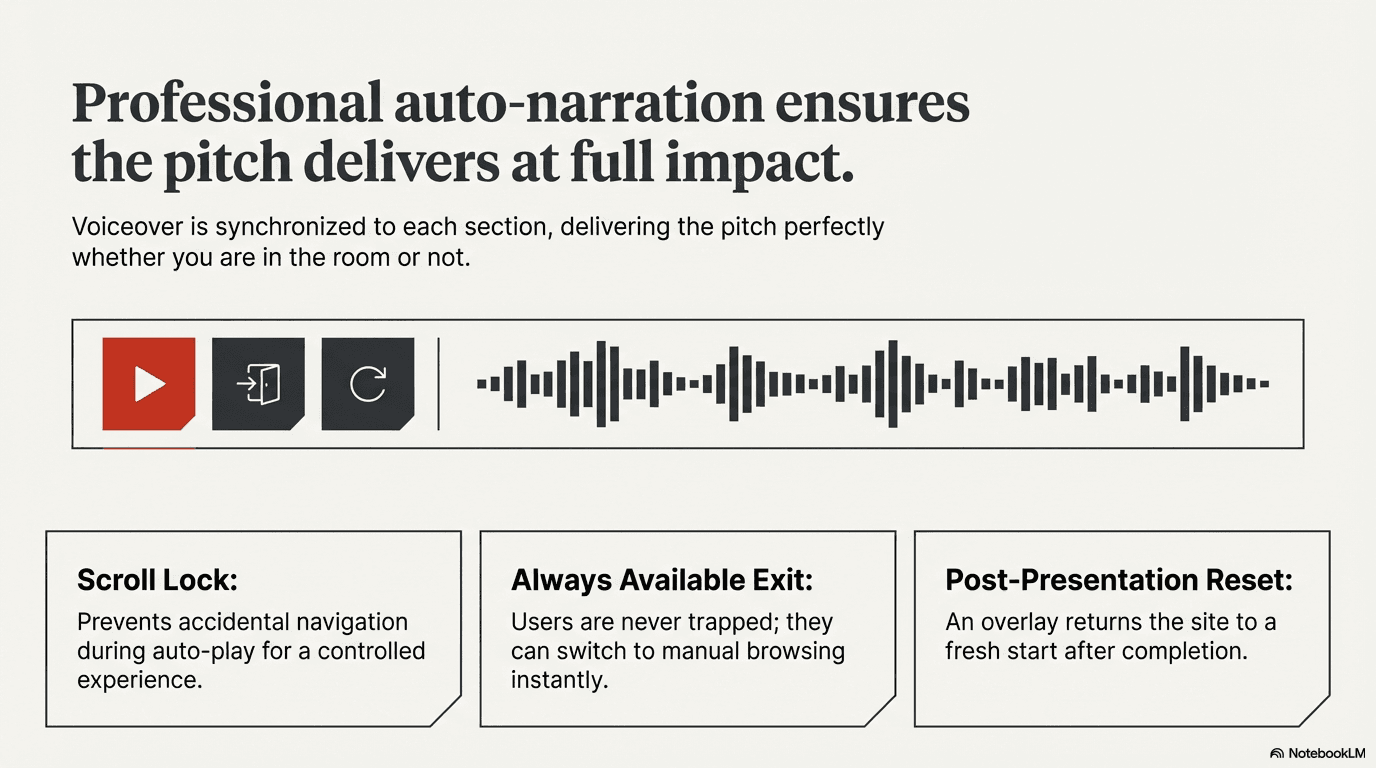
- Full auto-play presentation mode with segmented MP3 narration, rain-intro crossfades, and auto-scroll
- Mobile-first species carousel with scroll-snap, dot indicators, and audio-synced auto-cycle
- AI Species Identifier with GPT-4o vision — confidence %, full taxonomy, ecology, geography, conservation status, similar species
- Tabbed results UI with scan history persisted in localStorage
- Vercel serverless Python function for production API
- Deployed on Vercel with zero build step
Results
Overview
BioJalisco is a proposed citizen-science biodiversity monitoring platform for western Mexico. Before building the platform, the project needed a persuasion artifact — a site that communicates the vision with enough emotional and intellectual weight to win over academic partners, conservation organizations, and potential funders.
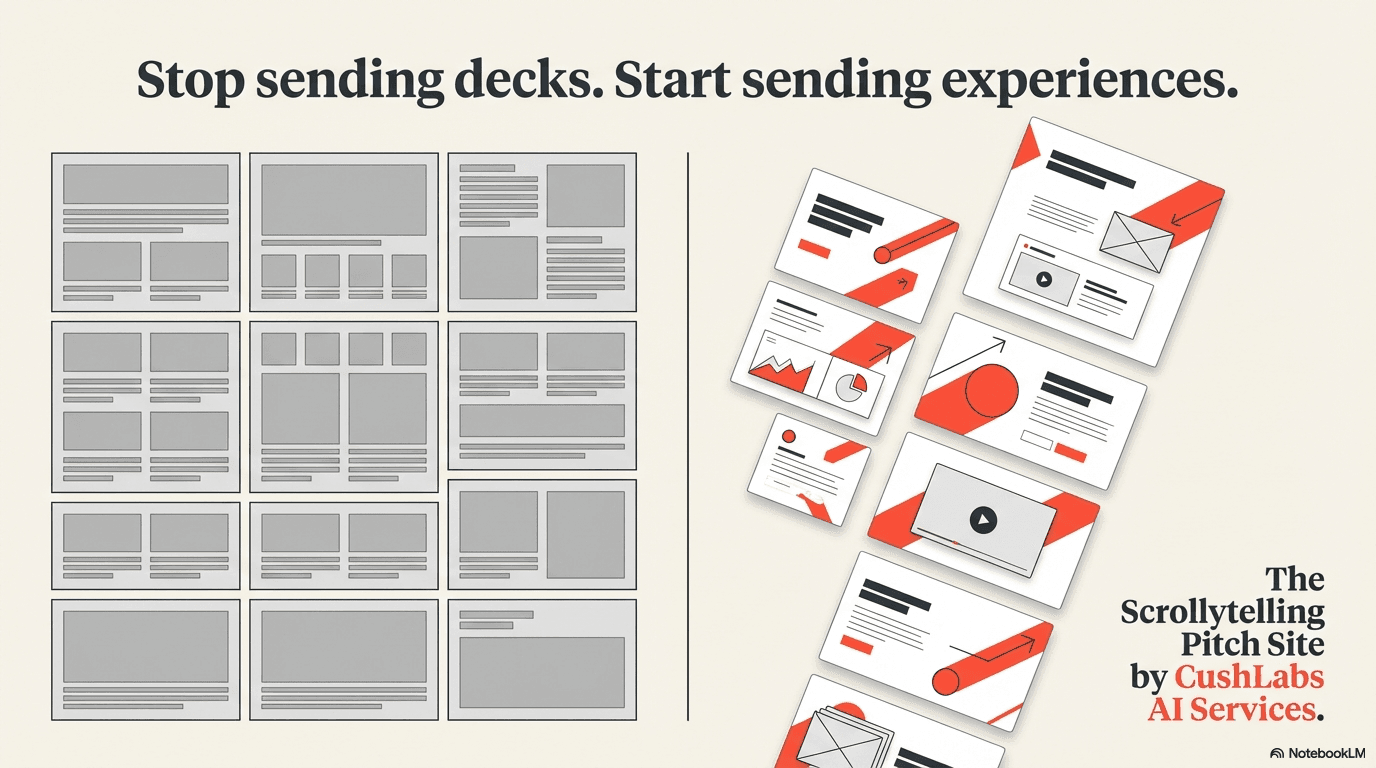
This scrollytelling site is that artifact. Built as a single self-contained HTML file, it uses a cinematic 5-act story arc (Hook → Problem → Vision → Evidence → Ask) with scroll-triggered animations, parallax photography, ambient forest audio, and bilingual content to make the case for BioJalisco.
Every image is embedded as a base64 data URI, making the site fully portable — it works offline, deploys anywhere, and has zero external dependencies beyond Google Fonts.
The Challenge
- The reach problem: Verónica Rosas-Espinoza has deep expertise in Jalisco's biodiversity, but traditional ecology covers only ~5% of the territory systematically. The pitch needed to make this gap visceral, not abstract.
- Dual audience: The site must work for Spanish-speaking Mexican academics and English-speaking international partners — not as separate pages, but as a seamless bilingual experience.
- Persuasion, not information: This isn't a documentation site. It's a narrative designed to move people from awareness to action. Every section must earn its scroll.
- Zero infrastructure: The site needed to deploy instantly with no build step, no CMS, no backend — just drop a file on Vercel.
The Solution
Cinematic narrative structure: A 5-act story arc modeled on screenwriting principles. The hero section poses a provocative question, the problem section makes the data crisis tangible with animated counters, the vision section introduces BioJalisco as the answer, the evidence section builds credibility with a roadmap and proof points (iNaturalist precedent, book trilogy, team credentials), and the closing ask creates urgency.
Bilingual architecture:
A data-lang attribute on the body element combined with .lang-es / .lang-en CSS classes enables instant language switching with zero page reload. All content exists in both languages in the DOM — CSS toggles visibility.
Self-contained deployment: All 9 images converted from PNG to WebP (88-95% size reduction), then embedded as base64 data URIs. The entire site is a single 1.8MB HTML file with no external asset dependencies.
Procedural audio: The ambient forest soundscape is generated in real-time using Web Audio API — layered noise filters for wind, oscillators for bird chirps, and a low drone for depth. No audio files needed.
Technical Highlights
- Base64 image pipeline: Python/Pillow batch conversion from PNG to optimized WebP, then base64 encoding — reduced total image payload from 16.8MB to 1.3MB (92% reduction)
- Intersection Observer scroll system: Multiple reveal classes (translate-Y, translate-X, scale) with staggered delays create a choreographed scroll experience without a single animation library
- Web Audio API synthesis: Three-layer procedural soundscape (filtered noise for wind, frequency-modulated oscillators for bird chirps, sine drone for depth) with fade-in/fade-out on toggle
- CSS-only parallax:
background-attachment: fixedon the vision section creates depth without JavaScript scroll listeners - Animated counters: Eased counter animations triggered by IntersectionObserver with cubic easing for natural deceleration
- AI Species Identification: GPT-4o vision API with structured JSON output — confidence percentage, full taxonomy (Kingdom→Species), ecology (habitat, diet, size, lifespan, behavior), geographic range with Jalisco/Mexico/invasive badges, IUCN conservation status, and similar species comparison. Handles wildlife, insects, plants, and domestic animals (breed identification with temperament and origin history).
- Tabbed results UI: Six-tab interface (Overview, Taxonomy, Ecology, Range, Conservation, Similar) with circular confidence gauge, taxonomy tree visualization, and scan history persisted in localStorage
- Serverless architecture: Same Python codebase runs as Flask dev server locally and as a Vercel serverless function in production
Results
For the Stakeholder Audience:
- Complete narrative pitch accessible in both Spanish and English
- Credibility elements (PhD photo, book trilogy, fieldwork photography) embedded directly
- Single URL to share — no login, no app install, works on any device
- Interactive Species Identifier demonstrates real AI capability — stakeholders can try it immediately
Technical Demonstration:
- Proves that a high-impact persuasion site doesn't need React, a build system, or a CMS
- Shows restraint in technology choices — vanilla JS for a project that genuinely doesn't need frameworks
- AI integration via serverless functions keeps the architecture simple while delivering real utility
- Image optimization pipeline that could be reused across CushLabs projects
Ready to discuss a similar solution?
Let's explore how AI automation can help your business.
Schedule a Consultation